Five Warriors Every War Party Needs: The Esports Archetypes That Separate Champions From Casualties
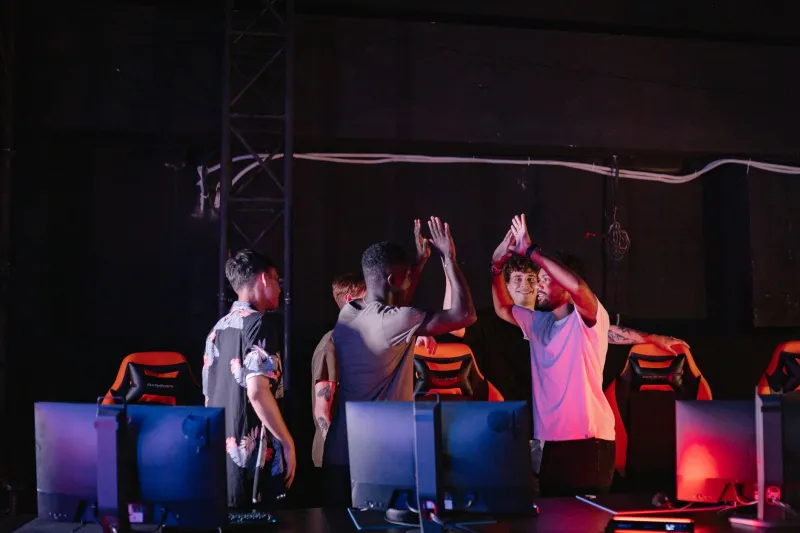
The ancient Greeks didn't march into battle with ten versions of the same soldier. Odysseus brought the cunning. Ajax brought the raw destruction. Achilles brought the edge that nobody else could touch. Every great war party — mythological or otherwise — was assembled with intention, each role filled before the first spear left a hand.
Modern esports rosters work the same way, even if most orgs won't admit it out loud. When a team collapses mid-season or flops at a LAN event they were supposed to dominate, nine times out of ten it's not a skill issue. It's an archetype imbalance. They built a roster full of the same kind of player and called it depth.
At Sons of Kryos, we've been watching this pattern play out across titles, regions, and decades of competitive play. So here's the scouting framework — five player archetypes that every championship-caliber roster needs, what to look for when evaluating them, and the real-world examples that prove the theory.
The Strategist: The Mind Behind the Mayhem
Every winning team has someone who sees the game three moves ahead. The Strategist isn't always the flashiest player on the server — in fact, they're rarely the one dropping highlight clips. What they do is shape how the entire team moves, adapts, and exploits the meta before opponents even realize what's happening.
Think of Athena — goddess of strategic warfare, not brute force. She won battles through positioning, foresight, and the kind of calculated patience that drives reactive players insane.
In esports, this archetype shows up as the IGL in CS2, the shot-caller in Valorant, or the macro-focused support in League of Legends. You're looking for someone with an elite read on the game's tempo, a calm communication style under pressure, and the willingness to sacrifice personal stats for collective execution.
Scouting signal: Watch how this player behaves after a lost round or team fight. Do they immediately start calling adjustments, or do they tilt? The Strategist recalibrates. Everyone else reacts.
Teams that have gotten this archetype right include early Cloud9 CS:GO squads, where the in-game leadership created structural advantages that raw mechanical rosters couldn't match. Teams that botched it? Plenty of stacked rosters with five fraggers and zero direction — you've seen them burn out before the group stage ends.
The Berserker: Controlled Chaos as a Weapon
Here's the archetype that gets misunderstood the most. The Berserker isn't just an aggressive player — aggression without purpose is just feeding. The real Berserker is someone who weaponizes pressure so effectively that opponents start making mistakes just anticipating them.
Mythologically, this is Ares at his most focused — not the reckless war god who loses himself in the fight, but the one who forces the entire battlefield to react to his presence.
In competitive play, the Berserker is your entry fragger, your hard-carry ADC, your aggressive jungler who forces the enemy team to draft around stopping one person. The stats will look insane. The risk tolerance will make coaches nervous. But the impact on enemy decision-making is worth every calculated gamble.
Scouting signal: Look at how opponents respond to this player specifically. Are teams banning around them? Double-teaming them? That's the Berserker effect. Pure fraggers who don't change opponent behavior aren't Berserkers — they're just scoreboard stuffers.
The Sentinel: The Backbone Nobody Celebrates
Every pantheon has a guardian. Heimdall watching the Bifrost. The Sentinel archetype in esports is the player who makes the rest of the roster possible — the one holding defensive structure, enabling rotations, and absorbing pressure so the Berserker can create chaos and the Strategist can execute.
This is the hardest archetype to scout because Sentinels don't generate highlight clips. Their value lives in the plays that don't happen — the flanks that get shut down, the rotations that arrive one second before disaster, the consistent positioning that keeps a round winnable when everything else is falling apart.
In Valorant, this is the anchoring Sentinel player holding site alone against a full execute. In League, it's the tank absorbing CC so the carries can operate freely. In CS2, it's the support player whose utility usage quietly controls entire halves.
Scouting signal: Pull up the advanced stats. Clutch conversion rate, trading efficiency, survival rate in lost rounds. The Sentinel's value is buried in the data that casual fans never look at. Teams that identify and pay Sentinels properly tend to build rosters that last. Teams that don't burn through backline players like they're disposable — and wonder why the structure keeps collapsing.
The Phantom: The Variable Nobody Can Plan For
Some players defy categorization. They're not quite the Strategist, not quite the Berserker — they're something in between, a player whose role shifts with the game state and whose best quality is unpredictability itself.
Mythologically, this is Loki. Proteus. The shapeshifter who gives opponents nothing reliable to prepare for.
In esports, the Phantom is your flex player — the one who can run multiple roles, adapt to whatever the meta demands, and keep opponents guessing about how the team is going to operate on any given map or patch. Championship rosters use this archetype to create strategic variance that rigid five-role teams simply can't answer.
Scouting signal: Watch their performance across different team compositions and patch cycles. Does their impact hold steady when the meta shifts, or do they fall off the moment their primary role gets nerfed? True Phantoms thrive in transition periods. One-trick players just look like Phantoms when the meta briefly favors them.
Team Liquid's best international rosters have historically featured players with this kind of positional flexibility — the ability to restructure team identity around a single versatile player is a serious competitive advantage.
The Anchor: The Weight That Holds Everything Together
This is the archetype that doesn't get its own category in most scouting discussions, which is exactly why so many rosters miss it. The Anchor isn't a role in the traditional sense — it's a presence. It's the veteran whose composure in a game-seven situation keeps four other players from mentally unraveling.
Think of it this way: Leonidas at Thermopylae wasn't necessarily the most skilled Spartan warrior in that pass. He was the one whose belief in the mission made three hundred men hold an impossible position. The Anchor player does the same thing in a tournament environment.
You're looking for experience under pressure, consistent performance in elimination scenarios, and the kind of locker room credibility that makes younger players trust the process when it's getting difficult.
Scouting signal: Check their record specifically in must-win situations — elimination matches, game fives, overtime rounds. Some players' performance drops in high-stakes moments. The Anchor's either holds steady or actually improves. That mental reliability is worth roster construction decisions that pure stats would never justify.
Building the War Party
Here's the practical piece: when you're evaluating your own squad or tracking an org's roster moves this offseason, run every player through this framework. Not every archetype needs to be a different person — sometimes one player covers two roles — but every function needs to be covered.
A roster with three Berserkers and no Sentinel is a highlight reel waiting to flame out in the quarterfinals. A team built entirely around Strategists and Anchors might be tactically brilliant and impossible to watch. The balance is the thing.
The greatest war parties in mythology weren't assembled by accident. Neither are the rosters that actually lift the trophy. Know what you're building before you build it, and you'll see the game — and the roster moves — very differently.