Forged Wrong: What Esports Academies Keep Missing From the Most Brutal Youth Training System Ever Built

Every esports org with a development pipeline will tell you the same thing: we build champions from the ground up. Structured practice schedules. Coaching staff. Film review. Mental performance coaches with LinkedIn profiles longer than your arm. It all sounds impressive until you line it up against what Sparta was actually doing with seven-year-old boys two and a half millennia ago — and suddenly, the modern academy model looks a little soft around the edges.
That's not a knock on the effort. It's a structural problem. And until orgs start being honest about where their development systems actually fall short, they're going to keep producing technically polished players who crack the moment the pressure gets existential.
What the Agoge Actually Was
The Spartan Agoge wasn't a boot camp. Boot camps have endpoints. The Agoge was a total identity reconstruction program that ran from age seven to around age twenty-one, and the entire point wasn't to teach boys how to fight. It was to make them into a specific kind of person — one who functioned under extreme deprivation, thrived in collective adversity, and derived their entire sense of self from belonging to something larger than individual achievement.
Kids were pulled from their families, thrown into communal barracks, given inadequate food on purpose, and expected to supplement their rations through resourcefulness — sometimes outright theft, which was permitted as long as you didn't get caught. They slept on reed mats they made themselves. They competed constantly, not just in combat drills but in social hierarchies, leadership roles, and group problem-solving. The physical training was brutal, but the psychological engineering was the actual product.
By the time a Spartan warrior graduated, he wasn't just skilled. He was built differently at the identity level. The hardship wasn't incidental to the program. It was the mechanism.
The Modern Academy Model: Discipline Without Reconstruction
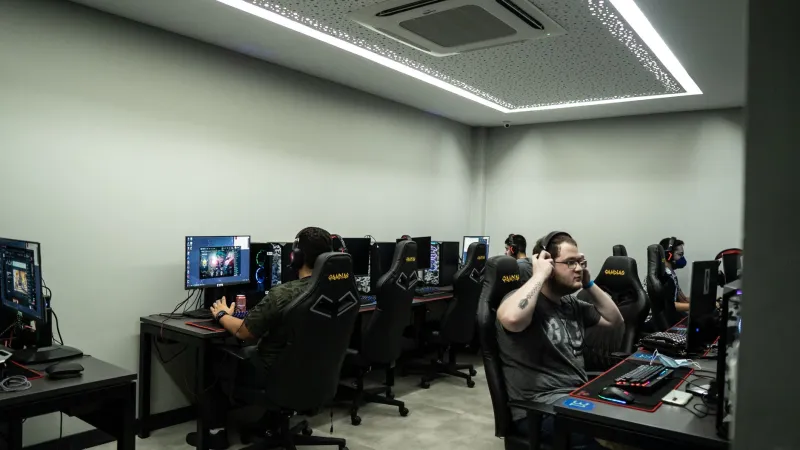
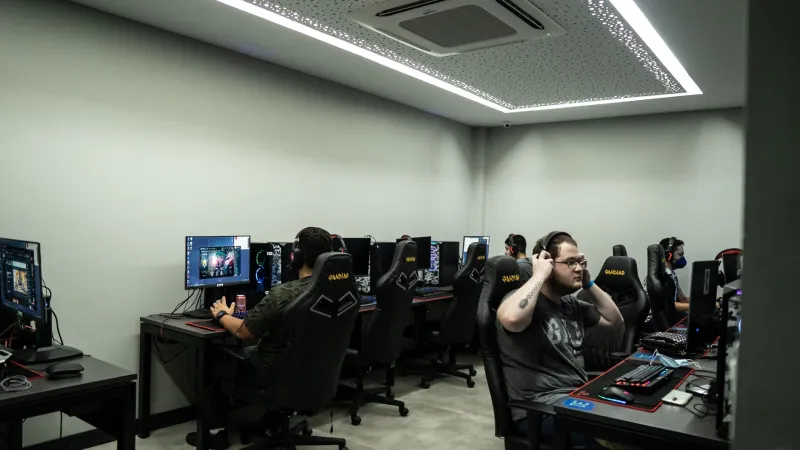
Now look at what Cloud9, 100 Thieves, and similar orgs are running. C9's academy infrastructure — one of the more developed in North American League of Legends — gives prospects access to team housing, dedicated coaching, structured scrimmage schedules, and performance analytics. On paper, that's a serious developmental environment. 100 Thieves has invested heavily in its content and competitive crossover pipeline, building brand identity alongside competitive development.
But here's the gap: almost none of these programs are designed to challenge identity. They're designed to develop skill.
The typical academy player gets a comfortable gaming house, a meal plan, a coach telling him what he's doing wrong in lane, and a clear performance ladder to climb. That's not nothing — it's genuinely better than what most aspiring pros had a decade ago. But it's also a fundamentally different proposition than what the Agoge was doing. The Spartan model assumed that comfort was the enemy of transformation. The modern esports academy model treats comfort as a baseline requirement for performance.
And the results bear this out. North American esports has a well-documented pattern of producing players who perform well in controlled environments and fold at international events where the stakes, the crowd noise, and the psychological weight are categorically different from anything they trained for.
The Adversity Gap
Here's the specific thing the Agoge got right that modern academies consistently avoid: sustained adversity with no exit ramp.
Spartan boys couldn't opt out. They couldn't go home when it got hard. They couldn't ask for a mental health day — not because mental health didn't matter, but because the entire system was designed to teach them that their sense of stability had to come from within the collective, not from external comfort. The discomfort was load-bearing. Remove it and the structure collapses.
Modern esports academies, for all their professional infrastructure, give players too many exits. A bad performance week leads to a coaching conversation, maybe some adjusted practice hours. There's rarely a sustained period where a prospect has to figure out who they are when everything is working against them — when the team is losing, the meta has shifted, the org is under public criticism, and there's no clear answer in sight. That pressure-cooker environment, maintained over months or years, is exactly what the Agoge was engineering.
Even the most rigorous US academy programs tend to cap adversity at the individual skill level. Can you hit this mechanical benchmark? Can you execute this macro decision under time pressure? Those are real challenges. But they're not the same as who are you when the entire system is grinding you down and your teammates are looking to you to hold it together?
The Collective Identity Problem
The Agoge also built something that esports academies are notoriously bad at manufacturing: genuine collective identity forged through shared suffering.
Spartan warriors didn't just know each other — they had been through something together that most people on earth would never experience. That shared adversity created a bond that made the phalanx more than a military formation. It was a unit of men who had proven themselves to each other over years of mutual hardship. Trust wasn't assumed. It was earned through the program itself.
Academy rosters in esports turn over constantly. Players cycle in and out based on performance metrics, contract windows, and org strategy shifts. There's rarely enough time — or enough shared adversity — for genuine collective identity to form. You can put five players in a house together and give them a team name, but that's not the same as a brotherhood forged under conditions that tested whether each member would hold or break.
Some orgs try to manufacture this through team-building exercises or shared off-site experiences. Those help at the margins. But they're a weekend retreat compared to a fourteen-year immersive program. The gap isn't in effort or intention. It's in the fundamental willingness to let sustained hardship do the work.
What Actually Needs to Change
None of this means esports academies should start making teenagers sleep on reeds and steal their dinner. The point isn't to replicate the Agoge literally. The point is to take its core mechanism seriously: identity is forged through adversity, not around it.
In practice, that means a few things. Development programs need longer time horizons with less frequent exits. A prospect who can leave the moment things get hard will leave the moment things get hard. Programs need to introduce sustained team adversity — not just individual skill pressure — as a deliberate feature of development, not an unfortunate byproduct of a losing streak. And orgs need to be honest that the goal isn't just to produce mechanically competent players. It's to produce players whose identity is stable enough to carry a team when the weight gets genuinely heavy.
The Spartans understood something that most modern development systems are still pretending they can skip: the forge doesn't just shape you. It becomes part of who you are. Until esports academies build that principle into their structure at the ground level, they're going to keep graduating players who look ready on the spreadsheet and come apart on the stage that actually matters.