Nobody Remembers Your Trophy Case: The Origin Stories That Actually Build Esports Empires
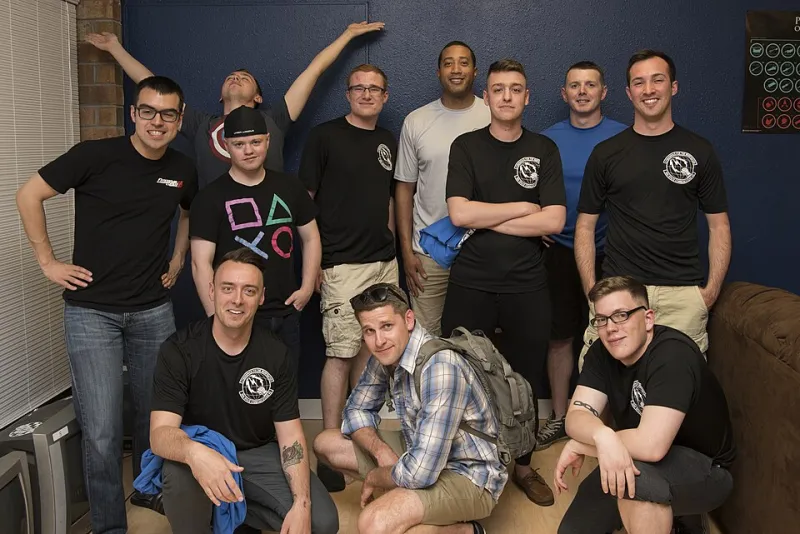
Photo: U.S. Air Force photo by Airman William Tracy, Public domain, via Wikimedia Commons
Every mythology class in high school teaches you the same dirty secret: the Greeks didn't worship Zeus because he was powerful. They worshipped him because his story was good. Overthrown father, swallowed children, a war for the cosmos — that's a narrative you can pass down around a fire for a thousand years.
Now look at esports.
We've got orgs dropping six figures on logo refreshes and jersey drops, then wondering why their fanbase evaporates the moment the roster turns over. Meanwhile, the communities that never die all have one thing in common, and it isn't a trophy case. It's an origin story.
The Basement LAN Is Your Troy
Ask any longtime fan of a legendary org why they stuck around and they won't cite a championship. They'll tell you about the scrappy era. The five players crammed into a house with mismatched chairs. The heartbreaking loss on the biggest stage that everybody watched together. The rivalry that got personal.
That's not nostalgia. That's scripture.
Mythologists call this an etiological myth — a story that explains why things are the way they are. Rome wasn't founded on a spreadsheet; it was founded on twins raised by a wolf. Your gaming community needs its own version of that. The night the mic cut out during the final round. The tournament bracket that screwed you so bad it became a rallying cry. The player who drove twelve hours through a snowstorm to make a LAN.
If you don't have one yet, you're not doomed — you're just early. Start paying attention. The raw material is already sitting in your Discord history.
Why Trophies Make Terrible Foundation Stones
Here's the uncomfortable truth about winning: it attracts fans, but it doesn't bind them. Bandwagon support is a lease, not a marriage. The moment results dip, the crowd thins out, because there was never anything underneath the results to hold onto.
Contrast that with the fan who knows your org lost its first eleven matches. Contrast the guild member who stayed through the dead year because they were there when the founders cleared their first raid with four people and a prayer.
Shared hardship is the strongest social glue humans have. Armies know it. Fraternities abuse it. Ancient cultures ritualized it. And esports, for all its analytics and VOD reviews, keeps forgetting it.
How to Find (or Forge) Your Founding Legend
You can't manufacture a myth overnight, but you can cultivate one. A few moves that actually work:
1. Excavate before you invent. Interview your longest-tenured members. The best stories are already half-formed in someone's memory — the job is surfacing them, not fabricating them.
2. Name your villains. Every great legend has an antagonist. That org that poached your captain. The bracket admin who "mysteriously" reseeded the tournament. A shared enemy, handled with humor rather than genuine venom, gives your story stakes.
3. Canonize your scars. The loss everyone remembers? Stop hiding it. Put it in your About page. Reference it in your content. A loss you own becomes a badge; a loss you bury becomes a weakness.
4. Repeat it until it's ritual. Myths only work through retelling. Tell the origin story to every new member. Make it the thing veterans roll their eyes at — that eye-roll is the sound of a culture forming.
5. Let the story outgrow its tellers. The best founding legends don't belong to the founders forever. When new members start retelling the story with their own embellishments, you've won. That's a living myth, not a marketing asset.
The Rebrand Will Not Save You
Every couple of years, some org torches its identity for a sleek new wordmark and a fresh content strategy, and every couple of years the community shrugs and moves on. A rebrand without a story is just a new logo on the same emptiness.
But an org with a real origin story can survive a roster wipeout, a dead competitive season, even a name change — because what fans signed up for wasn't the branding. It was the legend, and legends travel.
The ancients understood something we keep relearning: people don't rally around power. They rally around narrative. Build your trophy case if you want. But build your fire first, and make sure somebody's telling the story around it.