Speak It Into Existence: The Lost Art of the Esports Shot-Caller Who Sees the Match Before It Happens
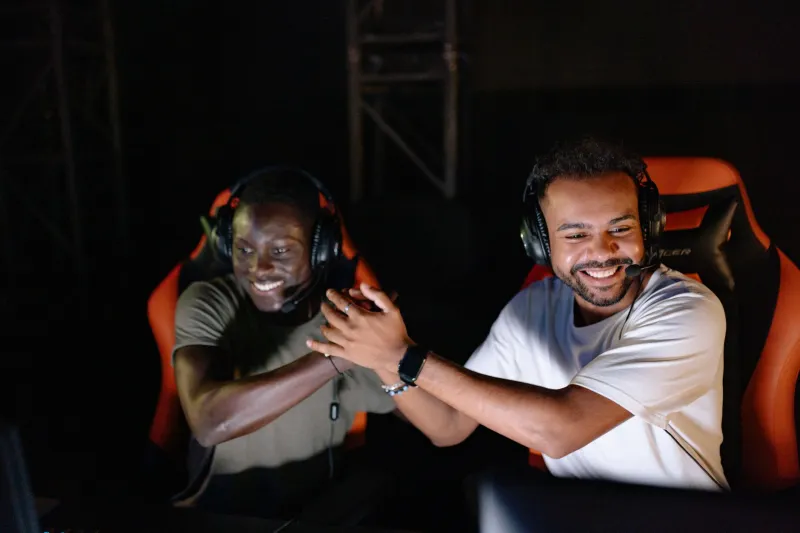
There's a moment in every high-stakes esports match where everything goes sideways. The plan cracks. An enemy jungler shows up somewhere they shouldn't be. A teammate overextends. The map suddenly looks like a different game than the one your team prepared for.
At that moment, most teams freeze — even good ones. They wait for someone to tell them what to do. And the difference between the squads that recover and the ones that crumble almost always comes down to one person: the shot-caller.
But not just any shot-caller. Not the kind who barks orders after something goes wrong. The kind who already told you it was coming.
Generals React. Prophets Shape.
Here's the thing about military generals that people get wrong when they apply the metaphor to esports: generals, by definition, are responding to a battlefield that already exists. They read the terrain, assess enemy positions, and issue commands based on observable reality. That's valuable. But it's fundamentally reactive.
The ancient oracle tradition operated on a completely different axis. The Oracle at Delphi didn't comment on what was happening — she described what would happen, in language cryptic enough to survive being wrong but specific enough to guide action. The power wasn't in the accuracy alone. It was in the certainty she projected. People made decisions, moved armies, and changed kingdoms based on her words because they believed she had already seen the outcome.
Elite esports shot-callers work the same way — and the best ones in the world will tell you so if you ask them directly.
When a truly elite IGL (in-game leader) opens their mouth mid-match, they're not describing what just happened. They're describing what's about to happen, and framing it so clearly that their teammates start making decisions around a future that hasn't arrived yet. That's not tactics. That's prophecy with a headset on.
The Predictive Voice and Why It's Different From Regular Comms
Most shot-calling sounds like this: "They're rotating bot — fall back, fall back." Reactive. Accurate. Fine.
Predictive shot-calling sounds like this: "They're going to try to force baron in the next 90 seconds. We're going to let them start it, and we're going to end it."
Notice the difference. The first statement describes a thing that is already happening. The second one describes a future event with total confidence and assigns the team a role within that future. It doesn't ask the team to process information and decide — it hands them a narrative they can step into.
This is the psychological architecture that separates elite shot-callers from competent ones. When your IGL speaks in futures instead of presents, your teammates don't have to think as hard in the moment. The cognitive load drops. Reaction times improve. And crucially, the team starts trusting the voice — because when the prediction comes true (and with a great shot-caller, it usually does), it reinforces the belief that this person sees something the rest of the team doesn't.
That belief is the real weapon.
The Authority That Isn't Earned Through Rank
Here's where it gets genuinely mythological. Ancient oracles didn't hold political office. They weren't generals or kings. Their authority came entirely from the perceived legitimacy of their vision. People listened because they believed the oracle had access to something beyond ordinary perception — a signal others couldn't receive.
The best esports shot-callers build that same kind of authority, and it has almost nothing to do with their individual mechanical skill. You can be a top-tier shot-caller and a mid-tier player. What you cannot be is wrong too often, or uncertain when it matters.
The moment an oracle hedges — "I think they might be going baron... maybe we should... I don't know" — the spell breaks. Doubt is contagious. One uncertain call in a high-pressure moment can unravel weeks of trust-building. This is why the psychological discipline required to be a great shot-caller is genuinely different from what it takes to be a great player. It's not about confidence in your own mechanics. It's about confidence in a version of the future that you're constructing in real time and selling to four other people simultaneously.
What Separates the Good From the Mythic
Let's get concrete. The esports landscape has produced some shot-callers who operate so far above the average that they've become almost legendary within their communities — players whose comms, when leaked or described by teammates, sound less like game communication and more like someone reading from a script that was written before the match started.
What those players share isn't just game knowledge, though they have plenty of that. It's the ability to do three things simultaneously:
One — Pattern compression. They've internalized so many game states that they're not actually predicting the future so much as recognizing a situation they've already seen fifty times. The "prophecy" is really just a massive database of pattern matches firing faster than anyone else can process.
Two — Narrative framing. They don't just recognize the pattern — they communicate it in a way that gives their team a story to inhabit. "We've seen this before and we know how it ends" is more powerful than "based on their positioning I believe they'll attempt an objective contest" even if both sentences mean the same thing.
Three — Emotional regulation under pressure. When the prediction is wrong — and it will be sometimes — the great ones don't collapse. They adjust the narrative without losing authority. They treat the deviation as a new data point, not a failure. This is the oracle's real burden: maintaining the belief system even when the vision was imperfect.
Why Most Teams Will Never Actually Have This
Here's the uncomfortable truth that Sons of Kryos isn't going to sugarcoat for you: genuine oracle-level shot-calling is extraordinarily rare, and it can't really be coached into someone who doesn't already have the baseline.
You can teach game knowledge. You can drill communication habits. You can run scrimmages until your team's rotations are mechanical muscle memory. But the ability to speak a future into existence with enough conviction that four other people restructure their decision-making around your vision — that's something closer to a gift than a skill set.
Which means the teams that have it are sitting on an asset that can't be easily replicated or scouted for on a spreadsheet. You can measure a player's KDA. You can track their mechanical consistency. You cannot quantify the moment a shot-caller's voice drops into a certain register and an entire team exhales because they suddenly believe they already know how this ends.
The Burden Is Real
The oracle archetype carries weight, and not just metaphorically. The players who fill this role in esports consistently describe the mental toll of being the person whose certainty holds a team together. Every wrong call chips at the foundation. Every moment of genuine uncertainty has to be managed so it doesn't leak into the comms and contaminate the team's confidence.
But the teams that find their oracle — their IGL who thinks in futures, speaks in certainties, and carries the weight of the team's belief — those teams play a different game than everyone else.
They don't just compete. They arrive at the server like they've already seen the ending.
And more often than not, they're right.