The Demigods Who Built It: 7 American Gamers Whose Sacrifices Forged the Esports World You Inherited
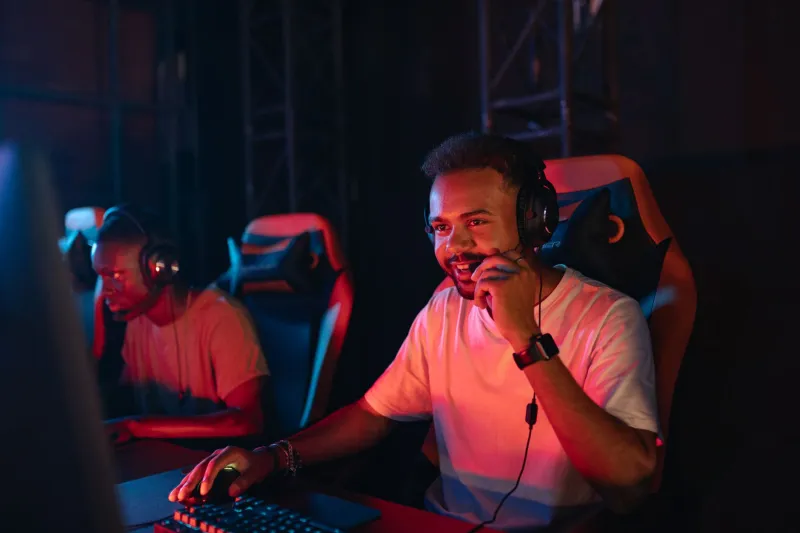
Here's something worth sitting with: the competitive gaming ecosystem you navigate today — the leagues, the prize pools, the broadcast infrastructure, the team contracts, the coaching staffs, the talent pipelines — none of it existed thirty years ago. Someone had to build it. And the people who did? Most of them built it without a roadmap, without financial backing, and without any guarantee that the thing they were constructing would last.
That's the founding hero story in every mythology worth studying. Prometheus didn't have a manual for stealing fire. Achilles didn't have a guaranteed spot in the Iliad. The demigods who forge new worlds do it at personal cost, in the dark, for people they'll never meet.
North American esports has its own demigods. Some of their names you might recognize. Some have been swallowed by time the way legends always are. All of them left something behind that you're still using.
This is their story.
1. Fatal1ty (Johnathan Wendel) — The First Professional
Before there was a career path in competitive gaming, Johnathan Wendel became the career path. Starting in the late 1990s, the Kansas City native dominated Quake tournaments at a time when winning a gaming competition meant collecting a few hundred dollars and going home. Wendel saw something different — a profession.
 Photo: Fatal1ty, via a.allegroimg.com
He pursued sponsorships with the same aggression he brought to fragging, eventually securing deals that made him one of the first gamers in history to earn a legitimate living from competition alone. His total career earnings across Quake, Painkiller, and other titles exceeded $450,000 at a time when that number seemed like science fiction for a gamer.
What Fatal1ty actually built wasn't just a personal brand — it was proof of concept. He showed the industry that a competitive gamer could be marketed, sponsored, and sustained as a professional athlete. Every player signing an org contract today is walking a path he paved.
2. Sundance DiGiovanni — The Infrastructure Architect
Most fans never heard of Sundance DiGiovanni. That's almost the point. As co-founder of Major League Gaming (MLG), DiGiovanni wasn't competing — he was constructing the arena.
MLG launched in 2002 and spent the next decade building the first real North American esports circuit, complete with structured seasons, live events, and eventually broadcast deals. The growing pains were enormous. The financial risk was real. But the framework MLG established — regional qualifiers, national finals, consistent scheduling — became the template that every major North American league has iterated on since.
When you watch the LCS, the Call of Duty League, or any structured NA circuit, you're watching DiGiovanni's fingerprints. He didn't play the game. He built the stadium.
3. Boxer (Lim Yo-Hwan) — The American Catalyst (By Way of Korea)
Hear us out. Boxer wasn't American, but his influence on North American esports culture is foundational in a way that can't be ignored. The South Korean StarCraft legend's dominance in the early 2000s was the first time American gaming audiences looked at a competitive player and recognized something genuinely mythological — a figure who commanded a fanbase the way a rock star commands an arena.
Boxer's rise forced North American organizers, broadcasters, and players to reckon with what esports could be at its ceiling. The ambition that fueled the first wave of American esports investment — the belief that this could fill arenas — was largely inspired by what Korea had already proven. Boxer was the proof of concept that made American organizers dream bigger.
4. Dan "TAFOKINTS" Le — The Coaching Pioneer
In traditional sports, the head coach is one of the most respected and compensated figures in any organization. In early esports, coaching barely existed as a concept. Players coached themselves, or the best player on the team made calls and everyone followed.
Dan Le helped change that. As one of the earliest dedicated esports coaches in League of Legends, he pushed the professionalization of the coaching role at a time when most orgs weren't sure they needed one. His work with teams in the LCS helped establish the expectation that a competitive roster required dedicated analytical and strategic support — not just talented players.
Today, every major esports organization fields coaching staffs, mental performance coaches, and analysts. That infrastructure traces back to the people like Le who insisted it was necessary before the industry agreed.
5. Stephanie "missharvey" Harvey — The Barrier Breaker
Five-time world champion in Counter-Strike. One of the most decorated competitive gamers in North American history. And for a long stretch of that career, one of the most visible reminders that the doors to competitive gaming weren't open equally.
Harvey (Canadian-born but a defining figure in the North American scene) competed at the highest levels of CS during an era when women in competitive gaming were routinely dismissed, sidelined, or treated as novelties. She won anyway — repeatedly — and used her platform to push for structural change in how orgs approached gender inclusion.
The conversations happening today about inclusive competitive pathways, women's leagues, and diverse rosters in esports are conversations her career helped make unavoidable. She didn't just compete. She forced a reckoning.
6. Mike Sepso — The Broadcast Visionary
Another MLG co-founder, Sepso's specific contribution deserves its own entry because it was distinct from DiGiovanni's. Where DiGiovanni built the competitive structure, Sepso obsessed over the broadcast — the idea that esports needed to be watchable as a product, not just playable as a competition.
His push to professionalize esports broadcasting, including the move toward online streaming before most organizations understood what Twitch would become, helped establish the viewer-first philosophy that defines modern esports media. The production value you take for granted when watching a major tournament — the casters, the overlay graphics, the crowd cameras — that aesthetic ambition has roots in what Sepso was arguing for when most people thought he was overcomplicating things.
7. Sean "Day[9]" Plott — The Cultural Bridge
Day9 didn't just play StarCraft at a high level — he explained it to a generation of fans who had never watched competitive gaming and didn't know why they should care. His daily broadcasts (the legendary "Day9 Daily") broke down strategy, celebrated the beauty of high-level play, and built a community around the love of the game rather than just the competition.
 Photo: Sean "Day9" Plott, via www.skynewsarabia.com
In doing so, Plott helped create the template for esports content creation — the idea that a knowledgeable personality could build a loyal audience by making the game more understandable and more meaningful to casual viewers. Every analyst desk on every major broadcast, every content creator turning gameplay into storytelling, carries a piece of what Day9 demonstrated was possible.
The Legacy You're Playing In
Every civilization inherits its shape from the people who came before it. The North American esports scene you compete in, watch, and belong to was built on decisions made by people who had no guarantee of success and no safety net if they failed.
That's what founding heroes do. They build for a future they can barely see, and then they step back — sometimes by choice, sometimes by circumstance — and let the next generation call it home.
You're standing in something they built. That's worth knowing.