Once Glorious, Now Dust: 7 Gaming Franchises That Burned Like Fallen Dynasties and Never Rose Again

Every great mythology has them — the bloodlines that rose to divine heights, ruled with terrifying authority, and then collapsed in ways so spectacular that people are still talking about the wreckage centuries later. The House of Atreus. The cursed lineage of Oedipus. Dynasties forged in fire and buried in hubris.
Gaming has its own version of this. And if you were there for any of the franchises on this list, you already feel it in your chest — that particular mix of nostalgia and grief that only comes from watching something you loved burn down from the inside.
These aren't just games that got old. These are empires that had everything, made choices that doomed them, and never found their way back. Let's pour one out.
1. Halo — The Spartan King Who Lost His Army
If you were a US gamer in the early-to-mid 2000s, Halo wasn't just a franchise. It was console gaming. Halo 2's multiplayer on Xbox Live essentially invented the modern online shooter experience for an entire generation. Halo 3's launch was a cultural event. The franchise had a stranglehold on competitive console gaming that felt unshakeable.
Then came the handoff from Bungie to 343 Industries, and with it, a slow unraveling that still hurts to watch. Halo 4 was competent but soulless. Halo 5 alienated the fanbase with a story nobody asked for. And Halo Infinite — which arrived promising a return to form — launched broken, lost its player base almost immediately, and watched its esports scene dissolve before it ever got off the ground.
The curse here isn't supernatural. It's structural. When you replace the craftsmen who built the throne with administrators who only know how to sit on it, the dynasty decays.
2. StarCraft — The God of Strategy Dethroned by Its Own Sequel
StarCraft: Brood War is arguably the most competitive real-time strategy game ever made. In South Korea, its pro players were treated like rock stars. In the US, it was the gold standard for strategic depth. It had a decade-long competitive scene that produced some of the most jaw-dropping individual performances in esports history.
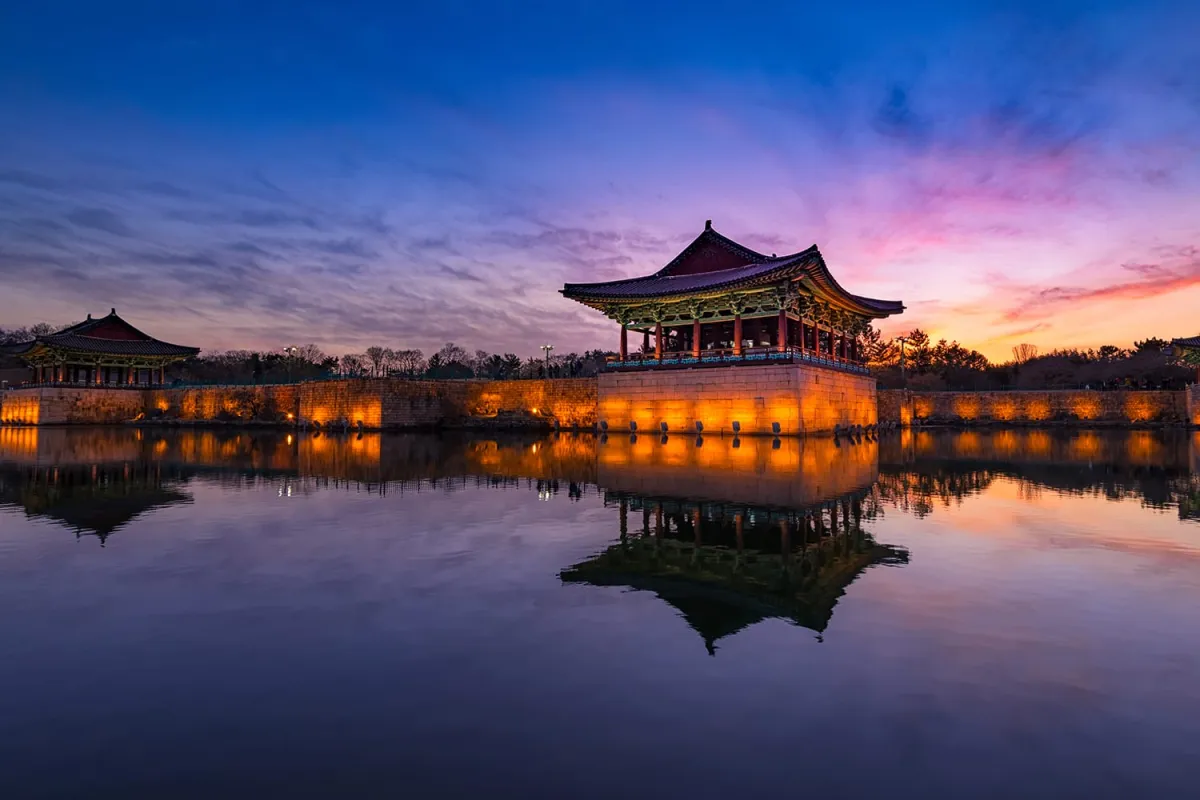 Photo: South Korea, via www.roadaffair.com
Then StarCraft II arrived, and instead of building on that foundation, it fractured it. The transition split the community, alienated hardcore Brood War loyalists, and produced a sequel that — despite having its own strong run — never quite recaptured the mythic status of the original. Today, the RTS genre as a whole is a ghost of what it once was, and StarCraft sits at the center of that decline like a fallen colossus.
The lesson: sometimes the sequel is the curse.
3. Guitar Hero — The Bard Who Played Himself to Death
Few franchises in US gaming history rose faster or fell harder than Guitar Hero. At its peak, it was a legitimate cultural phenomenon — you couldn't go to a party without someone wanting to shred on that plastic guitar. The franchise generated billions. It launched an entire genre.
And then Activision did what Activision does: it flooded the market. In 2008 alone, there were four Guitar Hero releases. Four. The plastic guitars started piling up in closets. The magic evaporated. By the time Guitar Hero: Warriors of Rock arrived in 2010, nobody cared anymore.
This is the mythological sin of greed — the king who couldn't stop expanding his kingdom until the weight of it crushed him. Guitar Hero didn't die because people stopped loving music games. It died because its own publisher bled it dry.
4. Tony Hawk's Pro Skater — The Trickster Who Fell Off His Own Board
Tony Hawk's Pro Skater 1 and 2 are legitimate masterpieces. The series dominated the late '90s and early 2000s, defined an era of US pop culture, and produced some of the most purely fun gameplay loops ever designed.
 Photo: Tony Hawk, via wallpapers.com
Then the sequels started coming faster than the quality could keep up. Underground, American Wasteland, Proving Ground — each one a little worse, a little more bloated, a little more desperate. By 2015, Tony Hawk's Pro Skater 5 was released in a state so broken it became a punchline. The 2020 remake of 1+2 was genuinely excellent, but its follow-up was cancelled, and the franchise went quiet again.
A dynasty revived only to be abandoned a second time. The curse runs deep.
5. Assassin's Creed — The Brotherhood That Lost Its Creed
Look, Assassin's Creed hasn't disappeared — but what it was compared to what it became is a story worth telling. The original trilogy, capped by Black Flag, built one of the most compelling mythological universes in gaming: a secret war, hidden orders, ancient artifacts, and a conspiracy spanning human history.
Then Ubisoft decided more was more. Annual releases. Bloated open worlds. A story that became so convoluted even dedicated fans couldn't follow it. The franchise traded its identity for content, and in doing so, lost the thing that made it special. It's still alive, but the soul of the original bloodline? Gone.
6. Mortal Kombat vs. the Shadow Years
MK1 through MK3 were iconic. Then came the long dark — a stretch of entries so bad (Mortal Kombat: Special Forces, anyone?) that the franchise nearly died entirely. Midway's financial collapse didn't help. For years, Mortal Kombat existed as a cautionary tale about what happens when a fighting game franchise loses its creative direction.
NetherRealm eventually pulled it back from the abyss, but the years of damage were real. The franchise clawed its way back through sheer craft and stubbornness — a resurrection story, but one that required surviving the curse first.
7. Quake — The Ancient God Nobody Worships Anymore
Quake basically invented the modern FPS competitive scene. QuakeCon was a pilgrimage for hardcore US gamers. The movement mechanics, the skill ceiling, the arena shooter DNA — it influenced everything that came after it.
And then the world moved on to team-based shooters, and Quake never found a way to move with it. Quake Champions launched in 2017 to modest reception and has since faded into obscurity. The ancient god of the FPS world now haunts the margins of the genre it created.
The pattern across all seven of these dynasties is the same: they reached the throne, then made choices — through greed, mismanagement, creative stagnation, or sheer bad timing — that no amount of nostalgia could undo. The curse isn't fate. It's a series of decisions that compound until the weight becomes unlivable.
The question for modern esports organizations and game developers is simple: which cursed bloodline are you building right now, and do you even know it yet?