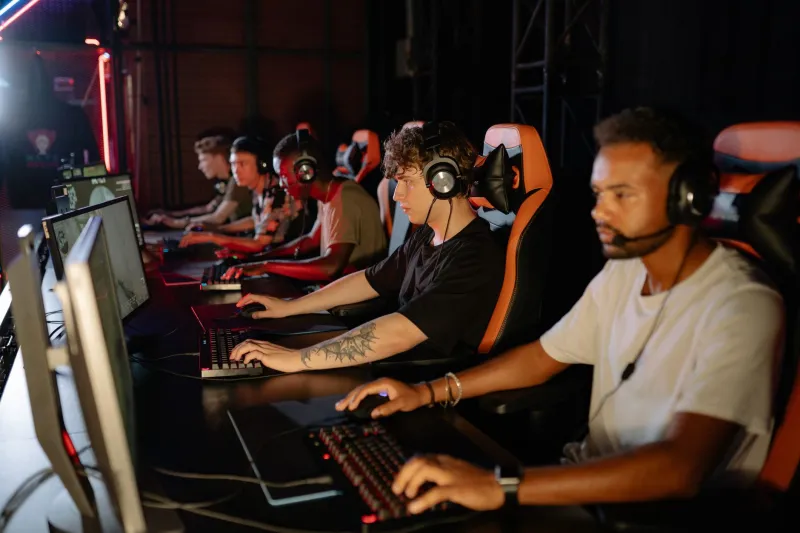
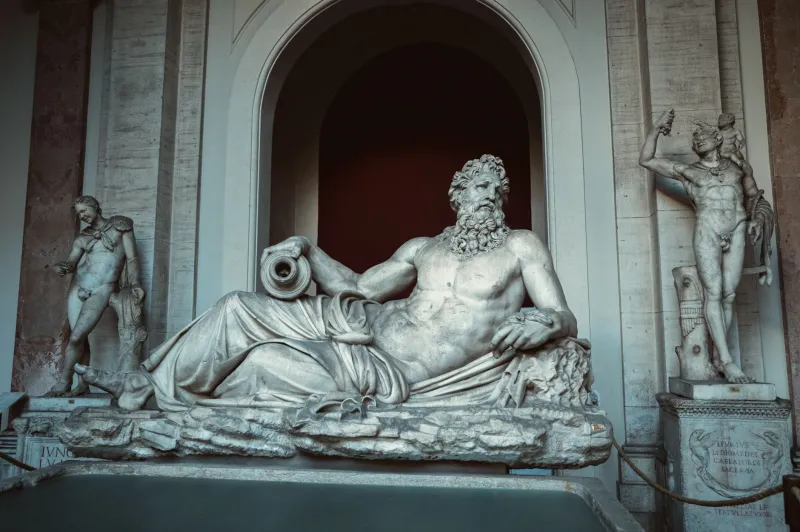
Why the Gods Keep Winning: How Ancient Mythology Became the Secret Architecture of Modern Esports
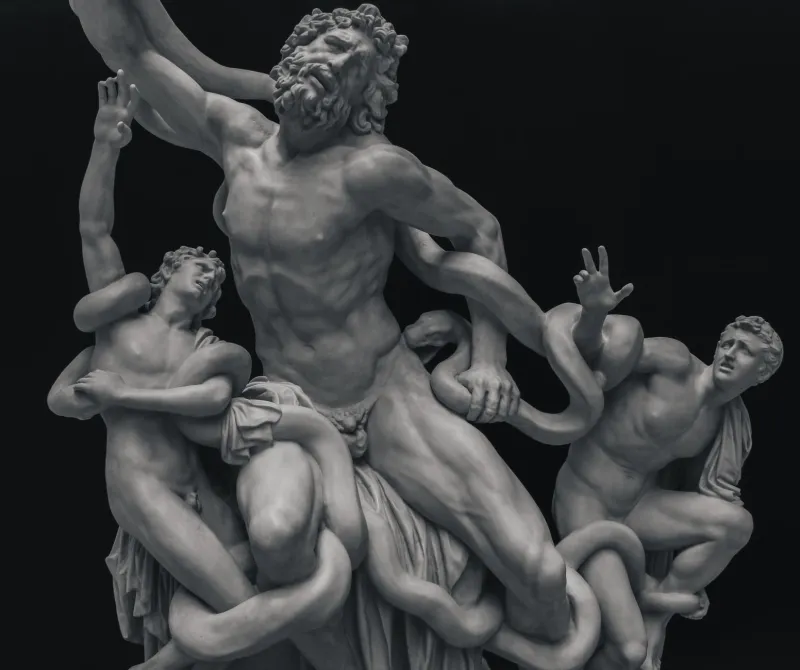
Open up the character select screen in Smite. Browse the champion roster in League of Legends. Boot up Hades or God of War: Ragnarök. What do you see?
Zeus. Odin. Athena. Thor. Ares. Loki. Persephone. Freya.
The gods are everywhere in gaming — and not as a passing aesthetic choice. They're structural. They're foundational. The most commercially successful, critically acclaimed, and competitively dominant titles in modern esports have built their entire identities on mythological frameworks that are, in some cases, three thousand years old.
That's not a trend. That's a design philosophy. And it's worth understanding why it works so well — because once you see it, you can't unsee it.
Mythology Is Pre-Loaded Emotional Software
Here's the core reason developers keep returning to the well of ancient myth: the emotional architecture is already built.
When a game introduces a character named Zeus and gives him lightning-based abilities and a domineering personality, players don't need a twelve-page backstory to understand the power dynamic at play. The myth has been doing that cultural pre-loading for centuries. We grow up hearing about these figures — in school, in movies, in the stories our parents told us. By the time we sit down at a keyboard or pick up a controller, we already have an emotional relationship with these names.
Game designers call this "narrative shorthand." You get the emotional weight of a fully developed character without spending the development resources to build that weight from scratch. It's efficient storytelling at a civilizational scale.
But it goes deeper than efficiency. Mythology doesn't just tell us who a character is — it tells us what they represent. Ares isn't just a strong fighter; he's the embodiment of uncontrolled aggression and the chaos of war. Athena isn't just smart; she's the personification of strategic wisdom and disciplined conflict. When a game builds mechanics around those archetypes, the gameplay itself starts to feel mythological — even to players who couldn't name a single Greek myth if you asked them.
League of Legends: A Digital Pantheon in Everything but Name
League of Legends is the most-played PC game on the planet. It has over 160 champions, a sprawling lore universe, and a competitive ecosystem worth hundreds of millions of dollars. And while Riot Games set their world — Runeterra — in its own fictional universe, the mythological DNA is unmistakable.
Leona, the Radiant Dawn, is functionally a solar deity. Diana is her lunar counterpart — a direct echo of Apollo and Artemis. Pantheon is literally named after the structure that housed the Greek gods. Nasus and Renekton are pulled wholesale from Egyptian mythology. Lissandra draws from Norse frost giant lore.
Riot has been open in developer commentary about drawing from world mythology to build champion identities that feel archetypal and resonant. "We want players to feel an immediate connection to a champion's identity," former Riot narrative director Tom Abernathy noted in a GDC talk on game storytelling. That immediate connection is exactly what mythology provides.
In a competitive context, this matters enormously. When you're watching a pro League match and Pantheon ults across the map, the drama of that moment isn't just mechanical — it's mythological. A god descending from the sky to change the fate of a battle. That's not a coincidence. That's design.
Smite: The Most Literal Experiment in Mythological Gaming
If League of Legends is mythology-adjacent, Smite is mythology-direct. Hi-Rez Studios built their entire game around the premise of playing as actual gods from actual pantheons — Greek, Norse, Egyptian, Hindu, Chinese, Mayan, Arthurian, and more.
What's fascinating about Smite from a design perspective is how much pressure that puts on the development team to honor the source material. Players who know their mythology notice immediately when a character's kit doesn't align with their divine domain. The community pushes back hard when a god's abilities feel disconnected from their mythological identity.
That accountability has actually made Smite better. The game's most beloved characters — Odin, Poseidon, Kali, Kukulkan — work because their mechanics are genuine expressions of their mythological nature. Odin's playstyle emphasizes tactical control and battlefield manipulation, reflecting the All-Father's identity as a god of wisdom and strategy, not just brute force. Kali's kit leans into her role as a goddess of destruction and transformation — high risk, high reward, relentless aggression.
The mythological framework isn't just flavor text. It's the design brief.
Hades and the Power of Intimate Mythology
Supergiant Games' Hades represents something slightly different — a more intimate, character-driven approach to mythological gaming that became one of the most critically acclaimed titles of the past decade.
Rather than treating Greek myth as a backdrop for combat spectacle, Supergiant used it as the architecture for a deeply personal family drama. The gods of Olympus aren't distant, terrifying powers — they're complicated relatives with their own agendas, insecurities, and moments of genuine warmth. Achilles appears as a mentor figure. Sisyphus shows up as a weirdly cheerful presence in Tartarus. Nyx is maternal and mysterious.
In interviews, Supergiant director Greg Kasavin has talked about wanting the mythology to feel "lived-in" rather than reverent. "These are characters who have existed for thousands of years and have complicated histories with each other," he's noted. "That gives us so much to work with emotionally."
The result is a game that attracted millions of players who had never touched a roguelite before — and introduced them to Greek mythology through the back door of a story they genuinely cared about. That's the power of mythological design done right.
The Norse Expansion: From Asgard to Mainstream America
If Greek mythology was the first wave of mythological gaming dominance, Norse mythology has been the second — and it's still cresting.
The God of War series' pivot from Greek to Norse with its 2018 entry didn't just reinvent one franchise. It signaled to the entire industry that Norse myth had the same commercial and narrative horsepower as its Greek counterpart — maybe more, given how underexplored it had been in mainstream gaming.
Assassin's Creed Valhalla followed. Valheim became a cultural phenomenon. Tribes of Midgard carved out its own niche. And throughout all of it, the core mythological framework — the World Tree, Ragnarök, the complex relationships between gods and mortals — provided the kind of existential stakes that make players genuinely invested in outcomes.
Norse myth carries a particular emotional weight that resonates with American gaming culture specifically: it's a tradition built around the idea that the end is coming, that the battle is unwinnable, and that the only honorable choice is to fight anyway. That's an extraordinarily powerful emotional framework for a competitive game. You're going to lose matches. You're going to get knocked out of tournaments. The Norse mythological tradition says: that's fine. How you fought is what matters.
The Modern Warrior Needs a Pantheon
At Sons of Kryos, we didn't land on our mythology-inflected identity by accident. We understand — because the data and the culture both prove it — that the most powerful gaming communities aren't just groups of players. They're factions with identity, history, and a sense of something larger than any individual match.
The best esports brands are digital pantheons. They give players a mythological role to inhabit: the strategic genius, the aggressive frontliner, the clutch performer who rises when everything is on the line. That's not marketing fluff. That's human psychology operating exactly the way it has for three thousand years.
The gods keep winning in gaming because they were always going to. They're not just characters. They're the oldest emotional technology humanity ever built — and the best developers in the world are still learning how to use them properly.
The question isn't whether mythology belongs in esports. It's whether your game, your guild, and your identity are tapping into that power fully enough.
For the warriors of Sons of Kryos, the answer has always been yes.