The Last Heir Syndrome: Why Gaming's Lone Bloodline Warriors Hit Different for Competitive Players

The Last Heir Syndrome: Why Gaming's Lone Bloodline Warriors Hit Different for Competitive Players
There's a specific kind of power fantasy that gaming has been perfecting for decades. It's not the one where you're the chosen hero surrounded by allies, celebrated from day one. It's the darker, hungrier version — the one where you're the last one left, carrying the weight of a bloodline that the world tried to erase. You didn't ask for this burden. But now that you've got it, you're going to burn everything down.
We call it the Last Heir Syndrome, and it's quietly become one of the most dominant emotional engines in competitive gaming culture.
The Archetype That Keeps Coming Back
Look across the landscape of gaming's most iconic protagonists and the pattern becomes impossible to ignore. Kratos — demigod son of Zeus, last survivor of his Spartan brotherhood, and the man who literally killed an entire pantheon — is maybe the purest expression of it. The Dragonborn in Skyrim is the last mortal capable of permanently ending dragons, heir to a power that should have died with the ancient Tongues. Even something like Halo's Master Chief carries it: the last Spartan-II standing, a super-soldier program that was supposed to produce an army and instead produced one man.
 Photo: Kratos, via www.ozenhifi.com
The formula is consistent. Take someone with extraordinary inherited power. Strip everything else away. Watch them reclaim what's theirs through sheer, unrelenting force of will.
This isn't accidental. Game designers and narrative directors understand that isolation amplifies stakes. When you're the last, every decision you make carries the weight of an entire legacy. Failure isn't just your failure — it's the extinction of something ancient and irreplaceable. That pressure creates intensity, and intensity is exactly what competitive gamers are chasing.
The American Underdog Wired Into the DNA
Here's where it gets interesting from a cultural standpoint. The Last Heir archetype maps almost perfectly onto the American underdog mythos — and that's not a coincidence.
American pop culture has a deep, almost obsessive love affair with the person who starts with nothing (or who has everything taken from them) and claws their way back through personal will and raw ability. Rocky Balboa. Luke Skywalker. Every rags-to-riches sports story ESPN has ever run. The scrappy kid from nowhere who becomes the champion isn't just a story we tell — it's practically a national religion.
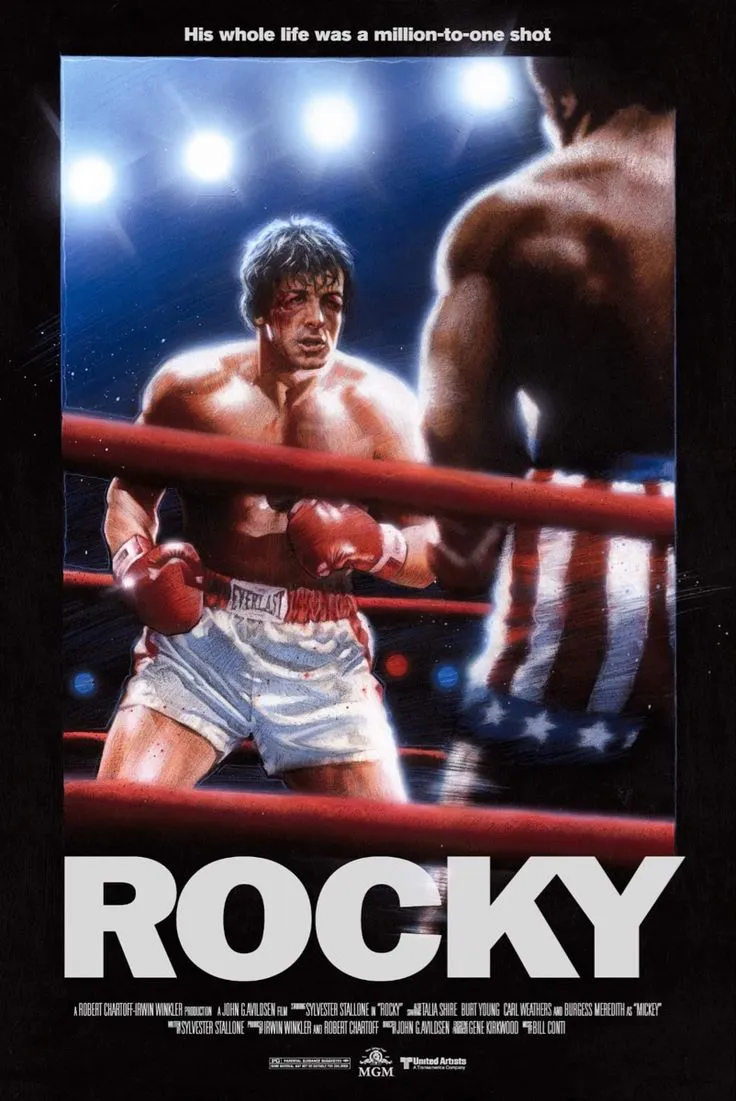 Photo: Rocky Balboa, via i.pinimg.com
 Photo: Luke Skywalker, via madein-cdn-prod.s3.amazonaws.com
Gaming taps directly into that vein. When you boot up God of War and you're playing as a man who was betrayed, enslaved, and had his family taken, the revenge arc isn't just emotionally satisfying — it's culturally resonant. Kratos isn't just a character. He's the American comeback story with a divine power set and significantly more bloodshed.
For competitive gamers specifically, this resonance is even sharper. The grind from Silver to Diamond, from open qualifiers to LAN events, from nobody to somebody — that's a Last Heir story in real time. You were overlooked. You were underestimated. The bloodline — whether that's raw talent, thousands of hours of practice, or a mentor who saw something in you — was always there. Now you're proving it.
How Guild Culture and Esports Orgs Are Weaponizing This Identity
Smart gaming communities have figured out how to bottle this feeling and use it as organizational glue. Here at Sons of Kryos, we're literally built on the concept — the sons of a legendary lineage, forged in battle, carrying something forward that others couldn't.
Esports organizations do this constantly, even if they don't frame it in mythological terms. Team Liquid talks about legacy. Cloud9 markets identity. FaZe Clan built an entire brand around the idea of a chosen few who operate differently from everyone else. The messaging is always some variation of: we are descended from something greater, and we're here to prove it.
Guild culture in MMOs takes it even further. The best guilds don't just recruit players — they recruit believers. They create lore, internal hierarchies, founding myths. "We were the first to clear this raid" becomes a creation story. "Our founders built something that shouldn't have survived" becomes a bloodline narrative. Players don't just join a guild; they become heirs to it.
This is why retention in strong gaming communities is so dramatically higher than in loose, informal groups. When you're part of a lineage, leaving feels like betrayal — not just of your teammates, but of something older than all of you.
The Emotional Architecture of Playing the Last One
There's a psychological concept called "legacy motivation" — the drive to act in ways that will matter beyond your own lifetime. Research consistently shows it's one of the most powerful motivators humans have. The Last Heir archetype essentially hacks this system.
When you're playing as the last of a legendary bloodline, the game is implicitly telling you that your actions are going to echo. You're not just winning a fight — you're writing history. You're not just leveling up — you're honoring the dead.
For competitive players, translating this feeling into actual performance is huge. The players who consistently punch above their mechanical skill level in clutch situations are almost always the ones who've attached meaning to what they're doing. They're not just trying to win a round. They're carrying something.
The Trope Isn't Going Anywhere — And It Shouldn't
Critics sometimes dismiss the lone-heir narrative as power fantasy wish fulfillment, and sure, on a surface level, it is. But wish fulfillment that connects to something as deep as legacy, belonging, and the drive to prove yourself against impossible odds isn't shallow — it's foundational.
Gaming keeps returning to this archetype because it works. It worked for the myths that inspired it — Achilles, Heracles, Beowulf, all lone warriors carrying the weight of divine or noble blood into impossible battles. It worked for the American stories we've been telling ourselves for centuries. And it works every time a competitive gamer decides that this season, this tournament, this ranked climb is the one where they finally show the world what they're made of.
The last heir doesn't quit. That's the whole point.
And if you're reading this on Sons of Kryos, you already knew that.