Seeing the Game Before It's Played: How Elite Esports Orgs Predict the Meta Like Ancient Oracles
Seeing the Game Before It's Played: How Elite Esports Orgs Predict the Meta Like Ancient Oracles
In ancient Greece, generals didn't march to war without first consulting the Oracle at Delphi. The prophecy wasn't always crystal clear — it rarely was — but the act of seeking foresight, of trying to read what was coming before it arrived, was considered as important as any sword sharpened or soldier trained. Armies that ignored the oracle didn't just lose battles. They lost everything.
 Photo: Oracle at Delphi, via download.logo.wine
Fast forward a few thousand years, and the competitive gaming world has its own version of prophetic vision. It doesn't come from a smoke-filled temple or a priestess in a trance. It comes from analysts hunched over spreadsheets at 2 a.m., coaches running controlled scrimmages against their own academy rosters, and psychologists profiling how opposing players respond to pressure. The top esports organizations aren't just reacting to the meta. They're calling it — weeks before it dominates the scene — and that ability to see around corners is the single biggest separator between a dynasty and a one-season footnote.
The Patch Note Prophets
Every major competitive title — League of Legends, Valorant, CS2, Dota 2 — operates on a rhythm of developer updates. Patch notes drop, the community reacts, and within days a new tier list is born. Most players and even most amateur teams live in that reactive cycle. They wait for the meta to form, then they adapt.
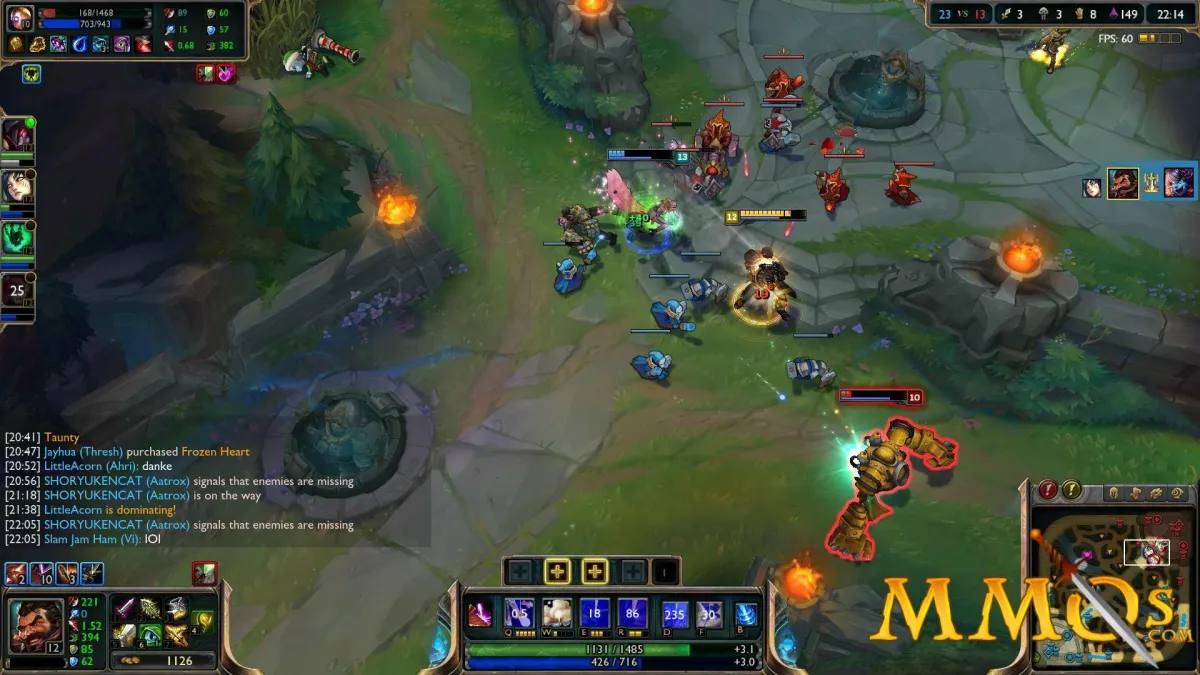 Photo: League of Legends, via mmos.com
Elite organizations don't wait.
Team Liquid's analytical infrastructure, widely regarded as one of the most sophisticated in North American esports, has long operated on the principle that every patch note is a map, not just a changelog. When a developer buffs a champion's base movement speed by three percent, most players shrug. Liquid's analysts are already running simulations on how that change interacts with three other recently buffed abilities, projecting which team compositions become suddenly viable and which previously dominant strategies just quietly died. By the time the broader community figures out what's strong, Liquid has already been practicing that composition for two weeks.
T1, the Korean League of Legends juggernaut, operates similarly. Their internal scrimmage data functions almost like a private oracle — a closed loop of information that the rest of the world never sees. When T1 shows up to a major tournament playing a style that feels completely alien to everyone watching, it's not spontaneous genius. It's the product of weeks of controlled experimentation conducted specifically because their analysts predicted the meta would move in that direction.
Scrimmage Data as Sacred Text
Here's something most casual fans don't fully appreciate: the scrimmages top teams run aren't just practice. They're prophecy machines.
When an org like Cloud9 or 100 Thieves builds a scrimmage block, they're not just grinding reps. They're running controlled experiments. Specific compositions are tested not because they're currently dominant, but because internal models suggest they will be once the next patch drops. Win rates in scrimmages against other professional rosters — who are themselves practicing current-meta strategies — give analysts a preview of what happens when the new approach meets established play. If the experimental comp is already beating pro-level opposition in a controlled setting, that's not a hunch anymore. That's data-backed prophecy.
Faze Clan's Valorant roster pulled this off beautifully during their dominant 2022 stretch. While opponents were still optimizing around the prevailing aggressive entry-fragging meta, FaZe's analysts had identified a slower, information-heavy style that would become devastatingly effective once players adapted to the aggression. They practiced the counter-meta before the meta itself had fully peaked. When the shift came, FaZe looked like they were operating on a completely different level. They weren't. They'd just consulted their oracle earlier.
Psychological Profiling: Reading the Enemy's Soul
The ancient oracles didn't just predict environmental conditions — storms, droughts, the movement of armies. They read people. They understood that human behavior under pressure follows patterns, and those patterns can be anticipated.
Modern esports orgs have figured out the same thing.
Psychological profiling of opponents has quietly become a standard practice inside top-tier organizations. Analysts build behavioral dossiers on enemy players — not just their champion pools or agent preferences, but how they respond to falling behind, how they play under crowd pressure at LAN events, whether they tilt after a single bad trade or stay disciplined through adversity. This information gets fed directly into game-plan preparation.
Evil Geniuses, during their most competitive periods in Dota 2, were notorious for this kind of deep opponent study. Their coaching staff didn't just scout what enemies were drafting. They catalogued how specific players' decision-making degraded under specific stress conditions, then built strategies designed to manufacture those exact conditions. It wasn't just about winning the game. It was about winning the psychological war before the first creep spawned.
This is the oracle's real power — not seeing the future as a fixed thing, but understanding that human beings are predictable under pressure, and that predictability is exploitable.
Why Most Teams Never Develop This Gift
Here's the uncomfortable truth: most gaming communities, most amateur guilds, most mid-tier competitive rosters don't develop meta foresight because they're too busy reacting. The ranked grind, the tournament circuit, the constant pressure to perform right now creates an environment where looking two weeks ahead feels like a luxury.
But dynasties — real dynasties — treat foresight as infrastructure, not luxury. They hire analysts before they hire a sixth player. They build internal data pipelines before they invest in flashy team houses. They study the oracle's craft because they understand something that separates long-term winners from short-term successes: the game is always moving, and the team that sees where it's going first will always have an advantage over the team that's still reacting to where it's been.
The ancient generals who ignored Delphi didn't think prophecy was real. They thought battlefield skill was enough. History remembers most of them as cautionary tales.
The Competitive Gift That Can Be Learned
What makes this fascinating — and genuinely useful for any competitive player or team trying to level up — is that meta prediction isn't pure mysticism. It's a skill set. It's patch note literacy. It's disciplined data collection from your own scrimmages. It's building a habit of asking not "what is strong right now" but "what will be strong in two weeks and why."
The oracles of ancient mythology were powerful because they had access to information and frameworks that others didn't. Today, the patch notes are public. The competitive replay files are often available. The psychological research on decision-making under pressure is sitting in academic journals. The raw materials for prophecy are everywhere.
The question is whether you're willing to do the work of becoming the oracle — or whether you'd rather keep showing up to the battlefield hoping the meta doesn't catch you off guard.
Dynasties consult the oracle first. Everyone else finds out the hard way.