Blades, Myths, and Mayhem: Ranking the 10 Most Unstoppable Mythology-Fueled Warriors in Gaming
Let's be real: nobody builds a warrior like the ancients did. The Greeks, Norse, Irish, Japanese — they weren't just telling bedtime stories. They were documenting legends so terrifying that even modern game designers, with all their processing power and motion capture tech, are still trying to keep up. Here at Sons of Kryos, we live for this intersection of ancient myth and modern combat. So we did what any self-respecting brotherhood of hardcore gamers would do — we ranked the best mythology-inspired fighters in gaming history.
Judging criteria: mythological accuracy (did the developers actually do their homework?), combat mechanics (is this character as dominant on-screen as they were in legend?), and sheer badassery (does this fighter make you feel like you could personally challenge a god?). Let's get into it.
10. Achilles — Troy: A Total War Saga
The Myth: Son of the sea nymph Thetis, dipped in the River Styx for near-invincibility, greatest warrior of the Trojan War. His rage alone could shift the tide of battle.
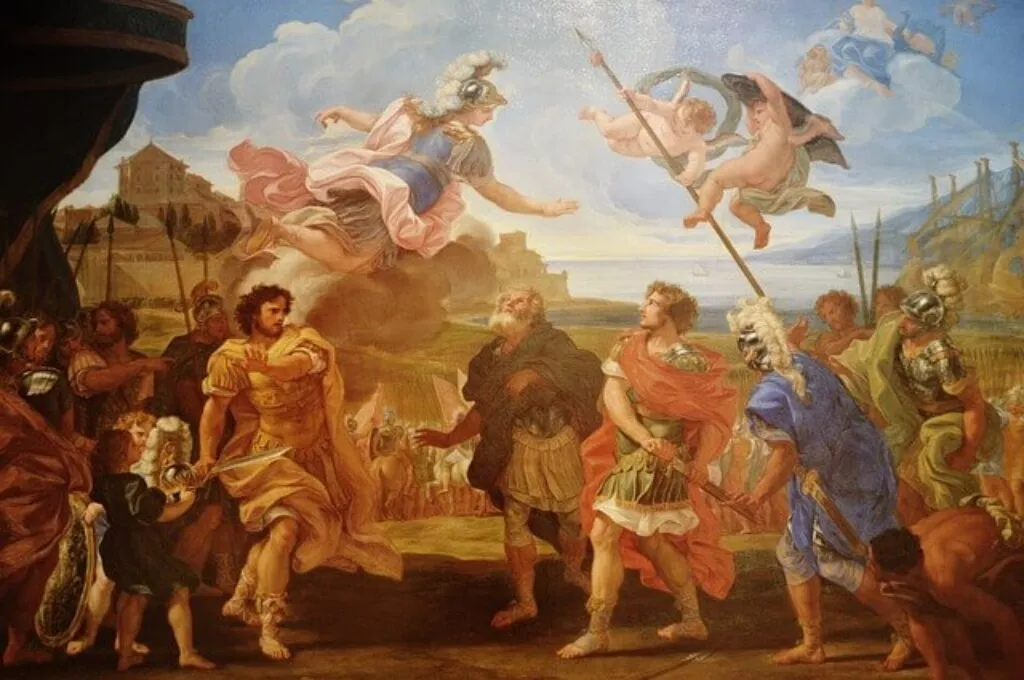 Photo: Trojan War, via symbolsage.com
 Photo: River Styx, via thumbs.dreamstime.com
The Game: Total War's Achilles is more of a strategic unit than a personal power fantasy, but when you zoom in on his combat animations and read his unit lore, the attention to detail is quietly impressive. He's devastating in the right hands.
Verdict: Solid but underutilized. The myth deserved a bigger spotlight. Still, respect for keeping the Myrmidons intact.
9. Susanoo — Smite
The Myth: Japanese storm god, brother of Amaterasu, slayer of the eight-headed serpent Yamata no Orochi. He's basically the Japanese pantheon's answer to Thor — but angrier and with better hair.
The Game: Smite's Susanoo is a bruiser with gap-closing speed and a kit that rewards aggressive play. His passive storm mechanics tie back to his divine domain in a way that actually makes sense. Not just a reskin — a real character.
Verdict: Hi-Rez did their homework. Susanoo belongs in any conversation about well-designed mythological fighters.
8. Cu Chulainn — Fate/Grand Order and Smite
The Myth: Irish demigod, son of the god Lugh, capable of entering a battle frenzy called ríastrad (the "warp spasm") that literally distorted his body into something monstrous. He also caught a spear mid-flight once. Casually.
The Game: Both Fate and Smite take a shot at the Hound of Ulster. Fate gives him a more anime-adjacent treatment but captures his relentless, never-say-die spirit. Smite leans into the warp spasm mechanics, making him one of the toughest fighters to put down in the game.
Verdict: Still underrepresented in mainstream gaming. Any developer brave enough to build a full Cu Chulainn title would have a masterpiece on their hands.
7. Hades — Hades (Supergiant Games)
The Myth: God of the Underworld — not evil, just misunderstood. He ruled over the dead with iron fairness and rarely left his domain. He was feared, not because he was cruel, but because death is inevitable.
The Game: Supergiant's Hades doesn't put you in control of the god himself, but his presence as a character — cold, complex, reluctantly caring — is one of the most mythologically nuanced portrayals in gaming. The game's entire structure mirrors the cyclical nature of Greek myth.
Verdict: Not a fighter in the traditional sense, but the mythological craftsmanship here is unmatched. Earns its spot.
6. Thor — God of War: Ragnarök
The Myth: Norse god of thunder, protector of mankind, wielder of Mjolnir. In actual Norse myth, Thor is less "Marvel hero" and more "violent, hard-drinking, deeply loyal warrior" who spent most of his time slaughtering giants.
The Game: Santa Monica Studio's Thor is a revelation — fat, brutal, morally complicated, and terrifyingly powerful. He's the most mythologically honest depiction of Thor in any medium, gaming or otherwise.
Verdict: A bold creative choice that paid off completely. This is what happens when developers read the Prose Edda instead of just watching superhero movies.
 Photo: Prose Edda, via clickup.com
5. Gilgamesh — Final Fantasy series
The Myth: King of Uruk, two-thirds divine, one of the oldest recorded heroes in human history. His story predates Homer by over a thousand years.
The Game: Final Fantasy's Gilgamesh is a recurring, sword-collecting, dimension-hopping warrior who's appeared in more entries than almost any other character. He's played for laughs sometimes, but his obsession with legendary blades actually mirrors the original myth's themes of legacy and immortality.
Verdict: Surprisingly deep for a comic-relief character. Square Enix has been sneaking mythology into your RPG for decades.
4. Ares — Smite
The Myth: Greek god of war — not the strategic, disciplined kind (that's Athena), but the raw, chaotic, bloodthirsty kind. Even other gods couldn't stand him. Zeus reportedly hated his own son.
The Game: Smite's Ares is a tank-support hybrid with chains that can lock down entire teams. He's domineering, unavoidable, and punishes anyone who ignores him — exactly like the myth.
Verdict: Perfect mechanical translation of the source material. Ares in the myth was impossible to ignore. So is Ares in Smite.
3. Zagreus — Hades
The Myth: A minor Orphic deity, sometimes considered a form of Dionysus, associated with rebirth and resurrection. Obscure enough that Supergiant had serious creative room to work with.
The Game: Zagreus is one of the finest protagonist designs in the last decade. His combat is fluid, his character arc is emotionally resonant, and the game's roguelite structure — die, learn, try again — is a literal mechanical metaphor for his mythological domain.
Verdict: A masterclass in taking a niche mythological figure and building something legendary from it.
2. Achilles — Assassin's Creed Odyssey (as a concept, via the Spear of Leonidas)
Wait — hear us out. The entire player-character framework of Odyssey is built around the idea of a demi-god warrior carrying divine lineage into impossible battles. Whether you play as Alexios or Kassandra, you're essentially living the Achilles myth — chosen bloodline, godlike combat ability, tragic family drama. It's Achilles by another name, and it works beautifully.
Verdict: Ubisoft built an entire game around the Achilles archetype without ever naming it. That's either brilliant or accidental. Either way, it hits.
1. Kratos — God of War series
The Myth: Kratos himself isn't a figure from classical Greek mythology (though kratos is a Greek word meaning strength/power). But the entire original trilogy is a deep, sometimes savage engagement with Greek myth — Ares, Zeus, the Titans, the Furies — treated with both reverence and creative fury.
The Game: There's no debate here. Kratos is the defining mythological warrior in gaming history. In the original trilogy, he's a force of divine vengeance tearing through the Greek pantheon. In the Norse saga, he becomes something more complex — a father, a reluctant god, a man trying to outrun what mythology demands of him.
Verdict: The gold standard. Kratos doesn't just exist within myth — he devours it, reshapes it, and makes it his own. Every mythology-inspired warrior in gaming history exists in his shadow.
Honorable Mentions: Fenrir (God of War: Ragnarök), Medusa (Hades), Odin (Smite), Shiva (Final Fantasy XIV)
Think we got it wrong? Drop your rankings in the comments. The Sons of Kryos community lives for this kind of argument — and we're not afraid to defend our list.